MBA – at the mall!

It’s a bit of a trend – business schools with their own campus, either on the main campus, or at another location.

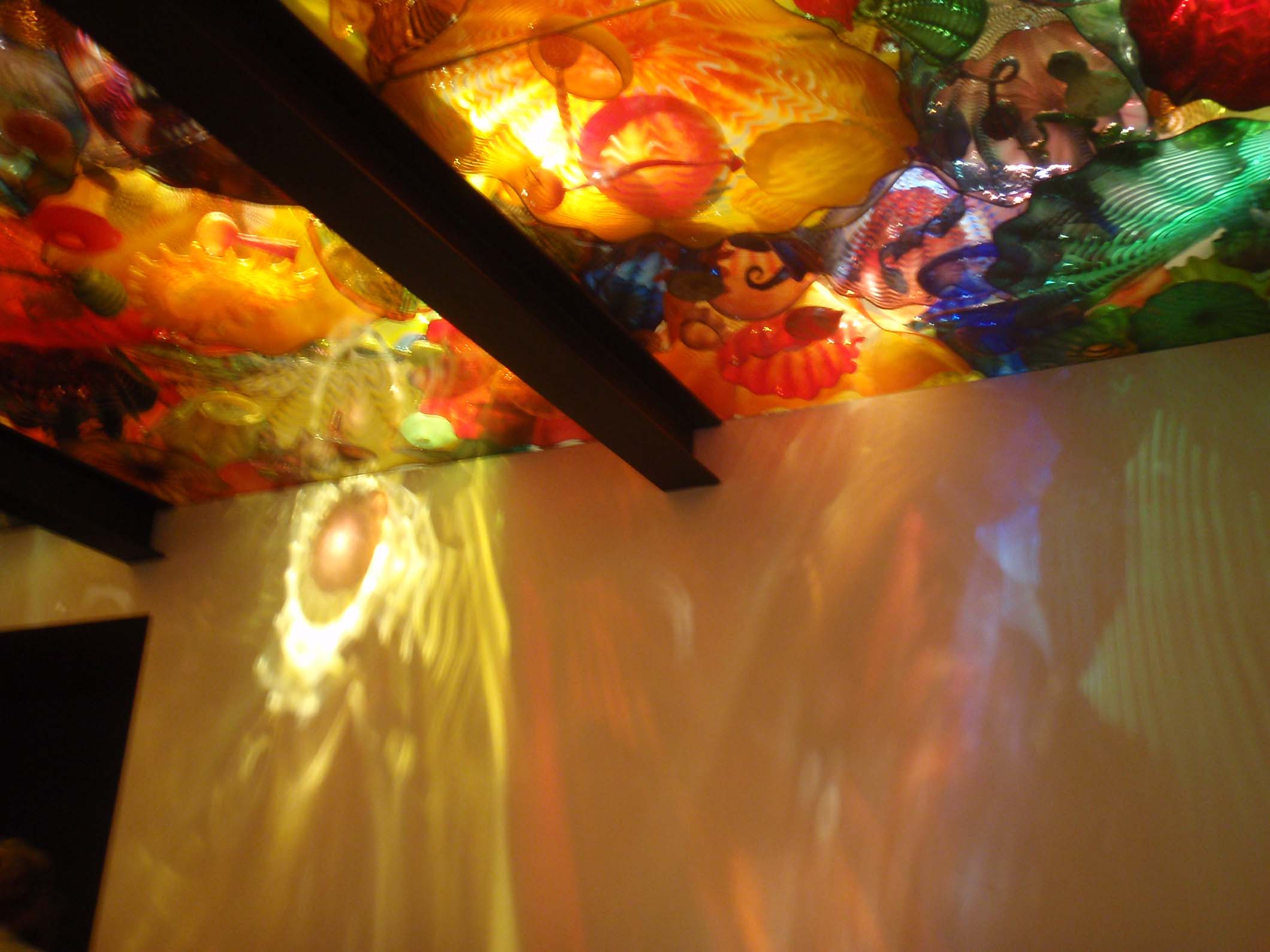
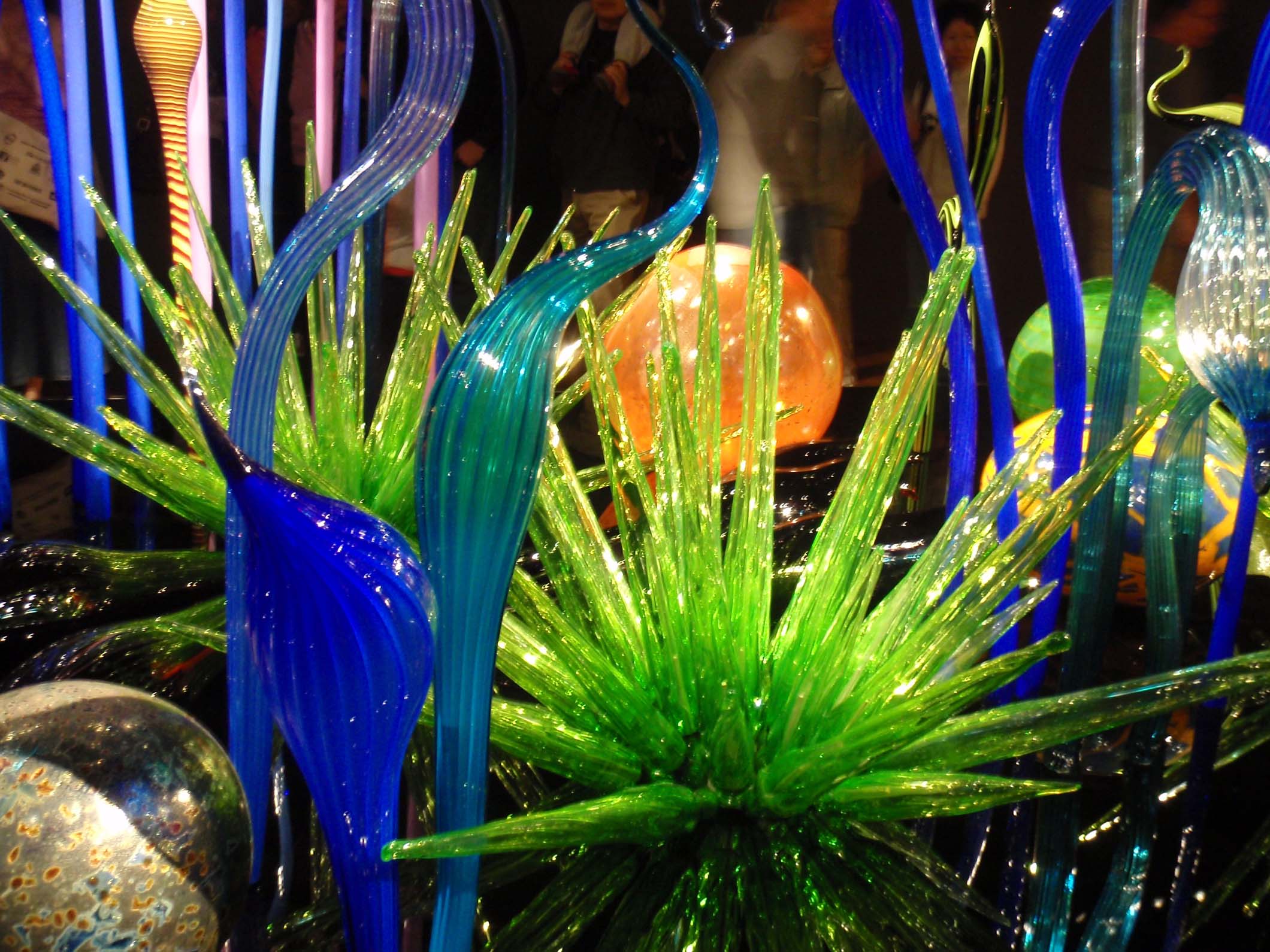
The business building at my school was old and creaky, though the university campus was very nice.   In January 2007, we moved to a new space, at a downtown mall!  You can’t just wander into the school area, from the shops at the mall, though we are in the same huge building as the mall.  As you can see, there are some great views of the mall from the business school “campus”.

View of the shopping mall

View of the shopping mall


View of the shopping mall from one of the corridors of our new location, taken through a glass window.  The business school is in the same building as the mall.  Our space – classrooms, offices, breakout rooms – is very nice.


I think it’s funny.

Regards,

amarez – mszv

Public Space, Private Space – the MMO player’s friend!

I wrote this piece as an article for the October Guild of Messengers newsletter – http://messengers.sixpencemedia.com/.    If you aren’t seeing it, the newsletter will be up soon. 

Let’s talk about instancing, in two multiplayer games (MMOs):

     Guild Wars – http://www.guildwars.com

     Myst Online: Restoration Experiment – Uru – http:/www.mystonline.com. 


From the official Guild wars Wiki – “An instance is a game location that is specifically generated by the game for a party or group…… Instancing allows a party to adventure by itself without other players stealing kills/loot, but also precludes any chance of meeting a random stranger at a secluded location ……” (http://wiki.guildwars.com/wiki/Instance)


Scenario time –  I’m in Guild Wars, and I need to find 5 gargoyle skulls. I start in an area with people, and I enter an instance of an area – the catacombs. The area is mine alone to play in. The magic, the beauty, the wonder and the fun – it’s all mine! I wander around, and I find some gargoyles – those meanies! I rain fire, and I get my skulls. I leave the catacombs and go back to town.


In Guild Wars an instance is not permanent. When you leave an instanced area, your copy goes away. The next time you go exploring , another copy of the area is generated for you. It sounds disjointed, but it doesn’t feel that way. It feels like you exploring the same area. This works because there are things you can accomplish in an hour or two of play.


In Uru instancing is permanent.  When I play Uru, areas of the world, called ages, are set up for me as I explore. Unless I decide to reset an age, whatever I do in my private ages stays “done”, even if I leave and come back to the age. If I push a lever in Teledahn to turn on power, the next time I enter Teledahn, the power is still on. It makes sense to have permanent instanced ages in Uru because the puzzles are lengthy and complicated. If an age was reset whenever I left – I wouldn’t get anywhere! I can also invite people to my private ages – I can share them with friends.


This feature of Uru is very appealing. All of my private ages feel, in some way, like home.


Both Uru and Guild Wars have shared spaces, an area owned by a group of people. Uru calls them neighborhoods. Guild Wars calls them Guild Halls.


Both games have multiplayer public spaces. Guild Wars has towns, estates, outposts. Guild Wars makes copies of the public spaces, so the towns don’t feel too crowded.  Each copy of a public space can be visited by any player. If your friends are in a different public space from the one you are in, you can join them.  Uru has one public space, Ae’gura, the city. About 100 people at one time can be in the public Ae’gura.  Uru also makes copies of the city accessible from the neighborhoods, to enable everyone to visit the city, whenever they want to.


Not all MMO players like instancing.  Arenanet plans to reduce instancing for its next game, Guild Wars II, and focus on more of a classic MMO shared game world.  But – I want to say to Arenanet – I love instancing!  Uru is currently not open for play, but there is some possiblity that it will come back.  MORE/Uru will continue to have permanent instanced areas.


Here’s what I love about instancing. Online games can be messy, complicated places, particularly for a devoted but intermittent player. They can be annoying to the player who likes both an online world with “people” and a virtual world where you can be alone – or with a few companions. My game time is very limited, and I want to have a good time each time I play. Sometimes I want to experience the beauty and the wonder of the worlds all by myself. I’m social, but there are times when I want to be alone. I don’t want to ignore the people in an online space, like you ignore strangers on the street in a real city. Sometimes I want the “people” to not be there at all! I want to control it – I want to be the one who decides when to be with people and when to be alone, in my beautiful online multiplayer worlds.


So please – Uru and Guild Wars – keep my private space!


A few pictures – because I like pictures


Teledahn - a private age

Teledahn - a private age


Teledahn, a private age in Uru


Guild Hall View

Guild Hall View


View from my  guild hall, a shared space in Guild Wars.


Regards,

amarez – mszv


Chihuly at the de Young – the landscape

I went to the San Francisco De Young museum last Sunday (September 21, 1008) to see the exhibit, Chihuly at the De Young – http://www.chihulyatthedeyoung.org/.

There are critics who hate Chihuly’s work.  They think it’s bereft of ideas.  It’s decorative, overblown, and “beautiful” without saying anything.

I think Chihuly’s work is beautiful – yes.  His installations put you in another world.  There’s a lot of it  – form, color, texture, imagery, light reflecting, all that.  Unlike some of his critics, I find them to be full of emotional resonance, and I also think there is more to them than simple beauty. 

To start with, I’m not sure that Chihuly categorizes his work as “art” and not “art”.    I think he knows the difference between a decorative work and a work of art (if you can even use such a term), but it’s not a dialogue he chooses to engage in.  So, he’ll do an art object that is, for want of a better word, “decorative”.  He’ll make an object that complements a room.  It’s decorative, for ornamentation.  Then, he’ll take that same object and change it.  He’ll change the scale, add to it, and mass it. He’ll put a hundred of them together.  Sometimes he’ll put them in a landscape.  The objects are transformed.

I think his chandeliers are examples of this – are they animate, inanimate, flowers, snakes?  There’s also this weird Baroque sensibility going on.  When he hangs them outside, over the canals in Venice – you ask yourself – what are they?  Are they Venetian crafts, are they plants, are they snakes, are they constructed, what is it?

In some works – such as the room with what looks like large glass reeds – he pares it down.  The reeds are huge, and glowing, but fairly simple.  He takes a landscape full of repetition – the reeds – and he changes it.  He adds light, color, and he blows it up – the reeds are huge. I think he plays on what it means to be a landscape.  It’s familiar and unsettling at the same time.

He plays with size and scale.  One of my favorite rooms was a room which had two boats – one with glass balls, and one with what looked like flower/plant things, all in boats.  What’s really interesting was the scale.  The glass balls in the boats appear to be so much bigger than the organic looking things in the other boat.

I think Chihuly’s work deals with 2 things
– what does it mean to be organic
– what does it mean to be a landscape

He also play with design.  He likes design.  I like it too – I like seeing a color, a pattern get transformed – in his 2D drawings, the Indian baskets and blankets he collects, and the glass that he does, as influenced by the baskets and the blankets.

I think he’s also not afraid of referencing something domestic and pretty, like a family garden.  In the last room of a show, he makes a garden.

It’s also bravura work, but there’s bravura work out there, even in contemporary art land – I’ll leave it to the reader to come up with examples!  Bravura is fine with me.  

I loved the show, and it belongs here – it felt like home.

Chihuly at the de Young - Ceiling

Chihuly at the de Young - Ceiling


Looking at a ceiling covered with glass objects.  It felt like being under water.


Chihuly at the de Young - Glass Reeds

Chihuly at the de Young - Glass Reeds

                                               
The Room filled with Glass Reeds

                                                                                                                   
              
Chihuly at the de Young - Floats and Flowers

Chihuly at the de Young - Floats and Flowers


Floats and Flowers – in Boats      


Chihuly at the de Young - The Garden

Chihuly at the de Young - The Garden


Closeup of the the Garden Room


Regards.

amarez – mszv